KUTCH BELLS
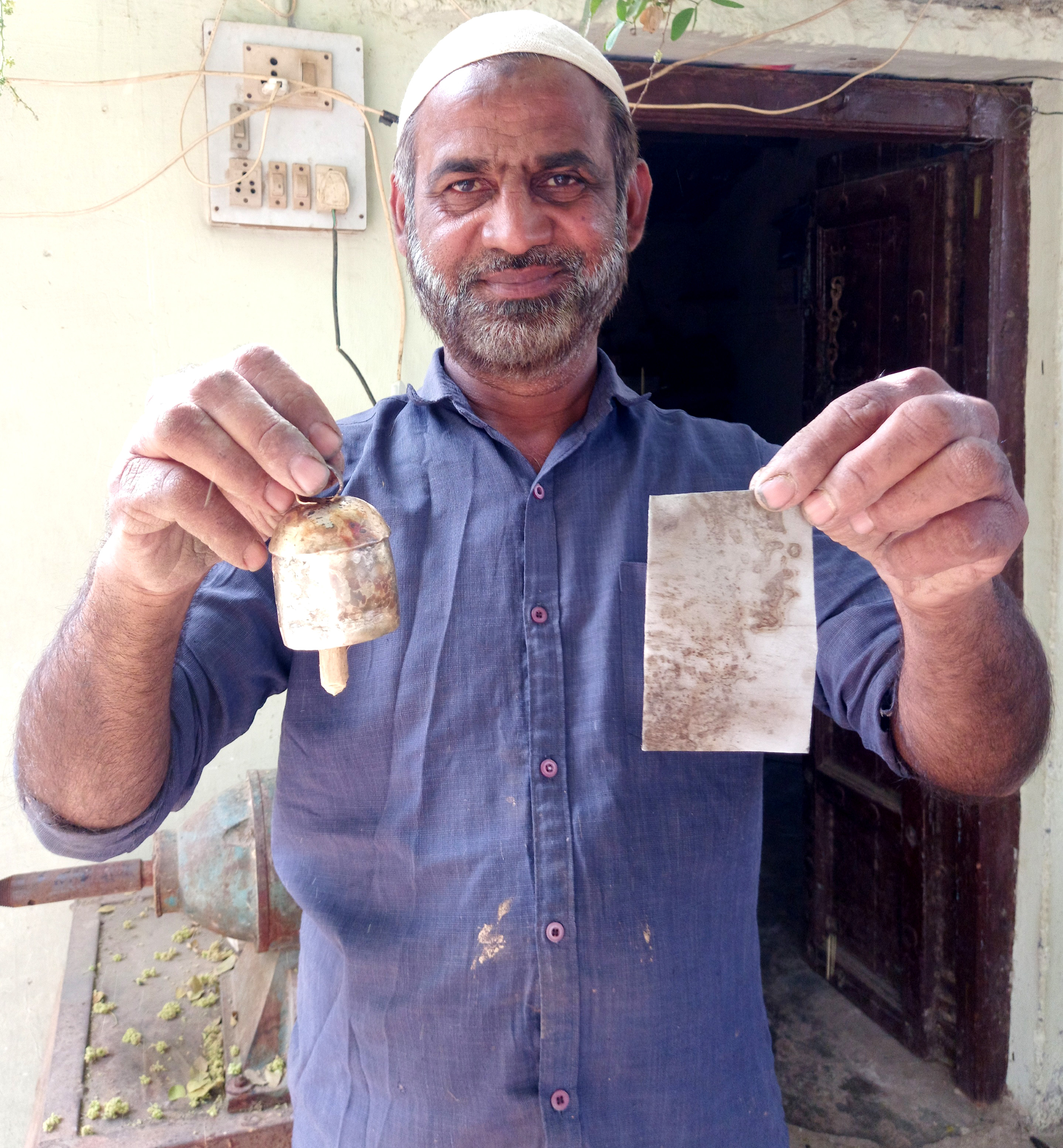
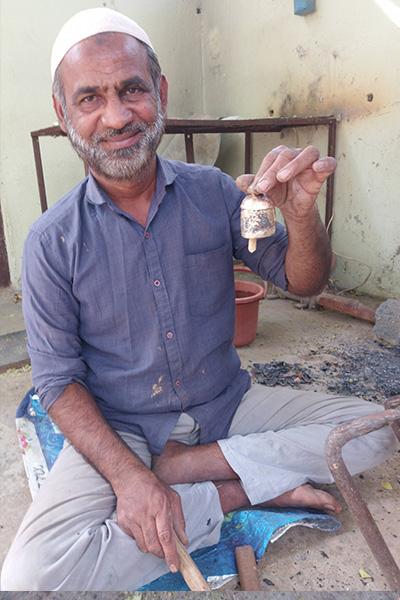
Bell making in Kutch, Gujarat, India is a long-established metalworking tradition commonly known locally as ghantadi. Pictured here is Lohar Ramjan Hasan.
The craft is generally understood to have developed from the needs of pastoral communities, which used differently tuned bells to help identify and locate cattle, goats, sheep and camels.
Historical accounts trace the tradition to Sindh and associate it particularly with metalworking families in Kutch villages such as Nirona, Zura and Kunaria; over time, the craft has also extended to Bhuj and evolved to include decorative bells, wind chimes and musical products.
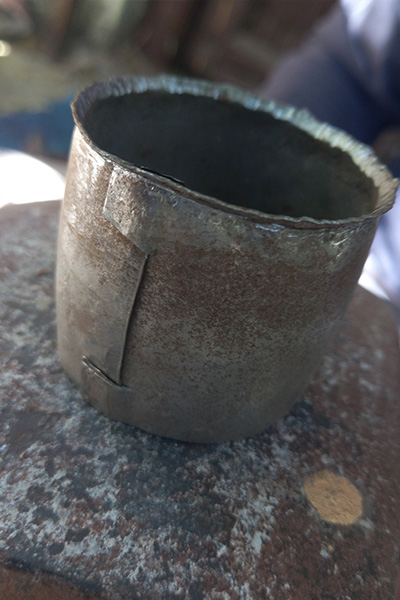
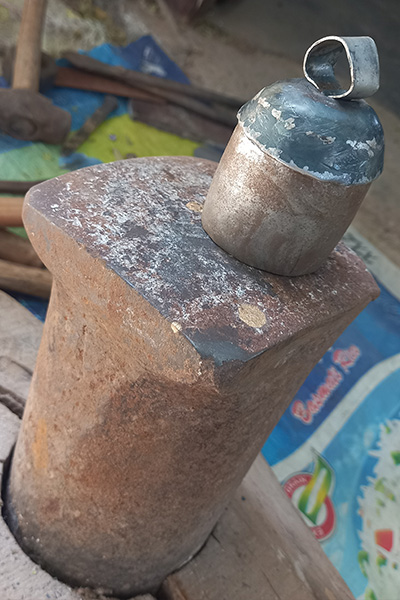
Traditional Kutch bells are handmade from shaped recycled iron sheets whenever it is available, along with new iron sheets when required. The sheet is marked, cut and hammered into a cylindrical bell body, with a domed cap and hanging loop formed separately; the parts are typically secured through interlocking joinery rather than welding.
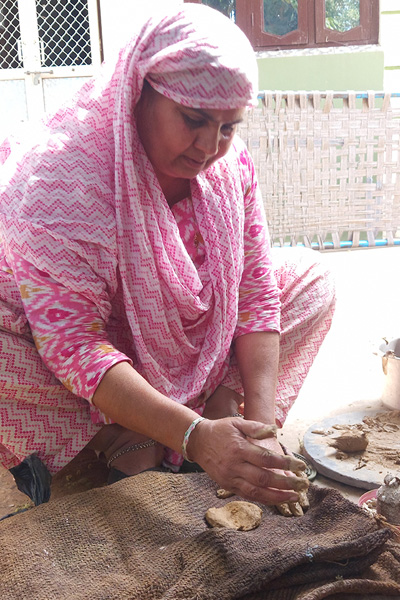
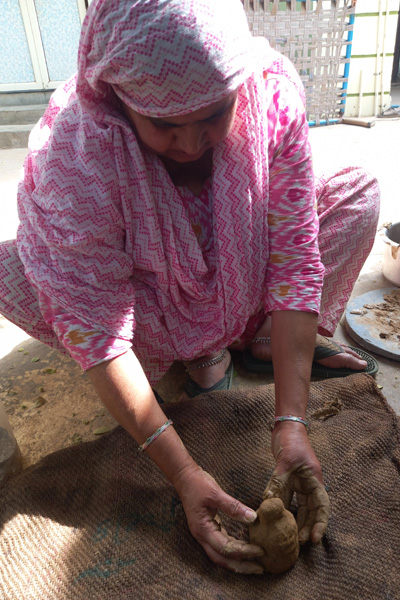
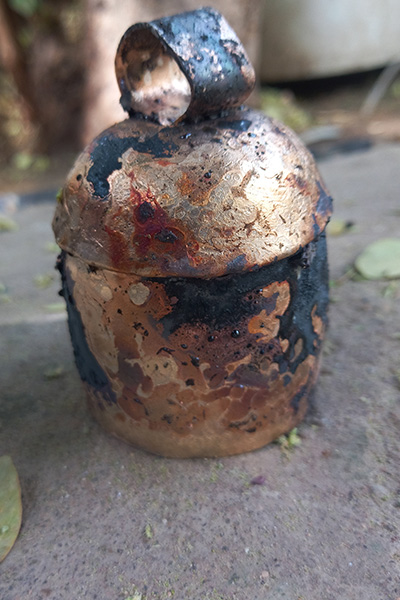
The bell is then coated with metal powder, wrapped in clay and cotton, fired in a kiln, cooled and cleaned before a wooden clapper is fitted inside.
The wooden “stick” inside the bell is properly called the clapper—sometimes also described as a wooden tongue or gong. It is suspended inside the bell from the metal loop beneath the dome and strikes the inner wall when the bell moves.
Traditional Kutch commonly describe the clapper as being hand-cut and shaped from dense local wood, and its length, thickness, size and shape all contribute to the bell’s individual tone and resonance.
Tuning is a defining part of the craft. Artisans alter the pitch through careful hammering, with the bell’s size, shape, wall thickness, rim and wooden clapper all influencing its sound. Traditional accounts describe 13 bell sizes, capable of producing a range of notes, which is part of what gives each handmade bell its own distinct character.